Sign up
OCTON HEALTH 360Digital Hospital · Evidence-Engineered Clinical AI

The digital hospital clinicians can lean on.

Walk into 18+ specialty clinics, voice-triage an emergency, or compute multi-modality diagnostic pathways. Every read is anchored to NCCN, BMJ, AHA/ACC, USPSTF and ADA guidance — with a licensed clinician on the final word.

OCTON · just thought aboutburnout_stress_management

Or consult the Library of Medicine

· or email + password
The Digital Hospital

Walk into any clinic, under one hospital.

Each OCTON faculty runs as its own clinic — its own AI, evidence library and care pathways — all under one roof. Pick a specialty, or let the Emergency Room triage you to the right one.

Explore the full hospital
Emergency · 5-level ESI / MTS triage ready Dermatology · iPhone dermal scan live Retina & Oculomics · AI suite online Oncology · 18-cancer atlas online Cardiology · ASCVD risk engine active Pulmonology · chest qXR support Neurology · FAST stroke triage Endocrine · HbA1c + GLP-1 pathways Mindcare · 24/7 confidential support Integrative · evidence-graded traditions Emergency · 5-level ESI / MTS triage ready Dermatology · iPhone dermal scan live Retina & Oculomics · AI suite online Oncology · 18-cancer atlas online Cardiology · ASCVD risk engine active Pulmonology · chest qXR support Neurology · FAST stroke triage Endocrine · HbA1c + GLP-1 pathways Mindcare · 24/7 confidential support Integrative · evidence-graded traditions
Every clinic reads your inputs against current clinical guidelines and the published evidence base. OCTON assists; a licensed clinician decides. Decision-support only — never a replacement for professional or emergency care.
Emergency Room · open 24/7

Not sure how urgent it is? Start here.

OCTON triages you hands-free with Voice Live, takes a 30-second vitals scan, screens for red flags, and prepares you for the right next step, calmly and without the wait.

Life-threatening? Call your local emergency number (112 · 911 · 999) now.

Voice-led triage
Speak; OCTON listens and routes you.
Instant vitals
Heart rate & more from your camera.
Right next step
Clinic, cubicle, or urgent care.
CASE · MARCUS · AGE 52 · CAD RISK

Watch a 10-year cardiac risk drop from 22.9% to 6.5%

One tap — the 20-minute cubicle walk-in plays, then Marcus's full report unfurls below: every recommendation, the same seven-day rotating meal plan his clinician printed, and the lifespan he won back.

Walk in with Marcus
USPSTF 2024NCCN v1.2025AHA / ACC 2024ADA 2025AASLD 2023EASL 2023ATA 2015ESMO 2024HIPAA · GDPR ready
Ancestral wisdom  Evidence-based practice

We weave ancestral cultural healing wisdom into scientifically underpinned, evidence-based clinical practice — the best of both worlds, so every plan respects who you are and what the evidence shows.

Clinical Operating System · Seven Pillars

Every consult, every recommendation — traceable to a citation.

OCTON isn't a chatbot wrapper. It's a clinical OS — symptom intake, structured history, Bayesian differentials, peer-reviewed citations, drug-interaction guardrails, clinician sign-off, and an immutable audit ledger.

FHIR R4 · HIPAA · USPSTF · NCCN · AHA · ADA · AASLD · EASL · ISMP · DDInter
Pillar 01

Symptom intake

Natural language → structured

Patient describes the issue in their own words — voice or text. OCTON parses location, onset, severity, modifiers, and accompanying signs into a structured object Whisper-clean.

PATIENT INPUT
"chest tight when i climb stairs, last 3 weeks, no pain"
STRUCTURED
symptomexertional chest tightnessonset3 weekspaindeniestriggerexertion (stairs)
Pillar 02

Structured history

PMH · FH · meds · social — agentically

OCTON conducts a focused history pass — PMH, family history, smoking, allergies, current meds — asking only what's needed for the differential it's already building.

pmhHTN · borderline T2Dfhpaternal MI age 49tobacco30 pack-yearmedslisinopril 10 mg · ASA 81allergiesNKDA
5 turns · 47 seconds · 11 fields populated
Pillar 03

Differential diagnosis

Bayesian posterior · ranked lifts

Real Bayesian update — every symptom, sign, and lab moves the posterior probability of every condition in the registry. Top differentials surface with quantified lift over baseline.

Coronary artery disease71%
lift ×8.9
Hypertension (uncontrolled)64%
lift ×2.3
Type-2 diabetes31%
lift ×2.6
GERD22%
lift ×1.6
Pillar 04

Literature-backed

Peer-reviewed · cited every time

Every recommendation is anchored to a peer-reviewed source — USPSTF, NCCN, AHA, ADA, AASLD, EASL, BMJ, NEJM, Lancet, JAMA. Citations are visible inline, with DOI, journal, year, and sample size.

NEJM 2017SPRINT — Intensive vs Standard BP controln=9,361
Lancet 2002Lewington — BP & CV mortality across 61 trialsn=1,000,000
AHA / ACC 2017Hypertension definition · Stage 1 ≥130/80guideline
BMJ 2000UKPDS-35 — HbA1c & mortality, dose-responsen=4,209
Pillar 05

Drug interactions

ISMP · DDInter · DrugBank

Before any prescription recommendation is surfaced, OCTON cross-checks against ISMP & DDInter for major / moderate interactions, contraindications, and dose adjustments by renal / hepatic function.

MAJOR · contraindicated
simvastatin 80 + amiodarone — myopathy risk ↑
MODERATE · monitor
lisinopril + spironolactone — hyperkalaemia, check K+
4 active meds · 12 pairs scanned · 1 major · 1 moderate
Pillar 06

Clinician review

Sign-off · escalate · annotate

Every AI recommendation routes through a clinician's queue. Sign-off, escalate, annotate, or override — every action timestamped and linked to the originating patient turn.

REVIEW QUEUE · 3 OPEN
●M. Chen · 52MECG + CACS → escalate to cardiology
●L. Bose · 48FAdd empagliflozin 10 mg · monitor renal
●F. Okonkwo · 71FDefer 2nd anti-resorptive · DXA in 12 mo
Pillar 07

Audit log

Every recommendation, forever

Immutable, timestamped, append-only ledger of every recommendation, citation, drug check, and sign-off. Export to FHIR R4 Provenance resources for compliance + medico-legal review.

AUDIT TRAIL · MARCUS CHEN · LAST 24H
09:14:02intake recorded — exertional chest tightness
09:14:31differential posterior updated — CAD ×8.9 lift
09:15:08citation surfaced — SPRINT 2017 · DOI 10.1056/NEJMoa1511939
09:15:44drug check — lisinopril × spironolactone → moderate
09:17:11clinician sign-off — Dr A. Rahim · MD-83291
Try OCTON Consult — no signup

Talk to OCTON.
Holistic health, every specialty, one chat.

Ask about cardiovascular risk, metabolic disease, MS, dementia screening, osteoporosis, mental health, infectious disease, dermatology, or any of the 18 cancers OCTON covers. The AI calls real catalog tools — you can see every step it takes.

What you can ask
Cardiometabolic: hypertension, T2D, NAFLD, CAD, stroke prevention
Cancer screening (USPSTF / ACS / NCCN) + 18-cancer atlas
Shared risk hubs — smoking, BRCA, Lynch, HCV/HBV, obesity
How the OCTON HEALTH 360 cubicle + Bayesian engine work
OCTON Consult · Live demo
6 turns left
Hi — I'm OCTON's holistic clinical consult. Ask me about cardiovascular risk, metabolic disease, screening, mental health, MS, dementia, infectious disease, dermatology — or any of the 18 cancers we cover. Try one of these:

Public demo · No PHI · Decision-support only · 13 specialties · cited to USPSTF · NCCN · AHA · ADA · AASLD

Companion records · New

OCTON remembers the people you care for.

Mention a friend, a parent, a patient — by voice or by chat — and OCTON opens a separate case file for them. Their history, their documents, their story: filed under their name, recalled the moment you say it again. Nobody re-tells their story from scratch.

Hard identity walls. One person's labs are never blended into another's record — or yours.
N
Nasser · friend, 65
Companion record
Kept separate
Type 2 diabetes — control drifting (HbA1c 6.4%)
Betel nut + cigars — the levers that matter
CT chest surveillance — stable, reviewed
Prescription · reviewed CT chest · reviewed Metabolic labs · reviewed
Holistic pilot cases · six cubicle visits

Six people walked in for a check-up. OCTON saw what nobody asked it to look for.

Cardio, metabolic, bone, neurology, pediatric vascular, liver — the same Bayesian + Hebbian + holistic-plan engine, six very different stories. Tap a persona to see the visit.

Pilot case · vita cubicle visit

Marcus walked in feeling fine. Twenty minutes later, OCTON saw his heart.

Marcus walked into the cubicle for a routine annual scan. He felt fine. Twenty minutes later, a coronary calcium score of 412 lit up an Agatston band that 96% of 52-year-olds never see. The Bayesian engine moved his 10-year ASCVD probability from 4.1% (pooled-cohort default) to 39.2% — a 9.5× lift. Untreated, his lipid panel + smoking + Stage-2 BP + impaired glucose stacked multiplicatively into a trajectory that would shorten his projected life by ~20 years — first MACE in his mid-50s. Same-day high-intensity statin + ASA + ACEi + smoking cessation programme + Mediterranean diet + 150 min/wk Z2. Two years later: LDL 64, BP 124/76, asymptomatic, tobacco-free. Marcus's likely first-MI age moved from his late 50s to his late 70s — a 28-year recovery of projected life and ~9 years above the average US 52-yo who never had his risk factors.

Marcus · 52 · 30-year smoker — OCTON HEALTH 360 pilot case
Pilot persona
Marcus · 52 · 30-year smoker
BMI 28 · BP 142/88 · LDL 168 · 30-year smoker (quit 2 yrs) · paternal MI at 49 · 'feels fine, runs 5K weekly'.
high risk · 78/100
Cubicle · CACS scan
412
Agatston CAC · Severe (>300) — equivalent to ≥75th percentile coronary plaque burden for age/sex

Agatston coronary artery calcium score 412 (LAD 218, LCx 86, RCA 108). Severe coronary calcification consistent with established atherosclerosis. No critical luminal stenosis identified on contrast pass.

·Proximal LAD: LAD proximal calcified plaque (Agatston 218)
·Mid LCx: LCx mid-segment calcified plaque (Agatston 86)
·Distal RCA: RCA dominant artery calcified plaque (Agatston 108)
Live Bayesian engine
10-year ASCVD event
Prior
4.1%
Posterior
39.2%
×9.5 lift
Age 52 + male + smoker×1.00
LDL 168 mg/dL×1.60
BP 142/88×1.30
Paternal MI <55×1.50
CAC Agatston 412×3.20
OCTON holistic plan

Diet, exercise, meds, lifestyle, monitoring — same day.

Every item below is referenced to a clinical guideline or landmark trial. Together they're projected to add 28.5 years of life expectancy and drop 10-year risk from 42.0% → 6.0%.

Diet· Daily — Monday through Sunday, each meal distinct
Mediterranean / PREDIMED diet · daily rotation
PREDIMED RCT (JAMA Intern Med 2018) — 30% MACE reduction at 5 yrs
Exercise· 5 days/wk cardio · 2 days/wk resistance
Zone-2 cardio + resistance
AHA Physical Activity Guidelines 2018 + MESA cohort — 150 min/wk Zone-2 halves CV mortality
Medication· Daily, indefinite
High-intensity statin (atorvastatin 40 mg)
AHA/ACC 2018 Cholesterol Guideline — CAC>100 mandates HIS
Lifestyle· Daily
Sleep · stress · tobacco abstinence
AHA Life's Essential 8 (2022) — sleep + stress are independent MACE predictors
Monitoring· Quarterly first year, then annual
LDL panel + HbA1c
AHA monitoring 2018
Monitoring· Quarterly
Cubicle quarterly visit (BP, HRV, body comp)
OCTON cardiometabolic surveillance
Monitoring· As-needed
Cardiac CT angio if symptoms develop
ESC 2024 chronic coronary syndromes
7-day meal rotation

Marcus eats something different every single day.

Seven distinct days — Mediterranean reset, Asian-inspired, plant-forward, coastal harvest, Levantine, slow-cooked Italian, and garden harvest. Each meal grounded in PREDIMED-style cardio-protective whole foods.

Monday · Mediterranean reset
Breakfast
Greek yoghurt + walnuts + berries · drizzle of EVOO + cinnamon
Lunch
Tuna + chickpea salad on rocket · lemon + EVOO · whole-grain pita
Dinner
Grilled salmon · roasted aubergine + tomato · farro · herbs
Snacks
Almonds (30 g) · orange · dark chocolate (1 sq, 85%)
Life-expectancy projection

From age 52 — three futures.

OCTON plan adds+0.0years of life
Versus the untreated trajectory — and 0.0 years above the average peer who never had these risk factors. Compounded across diet, exercise, meds, sleep and stress — every lever pulled at once.
Age-matched US baseline (CDC NVSR-77)78.4 yrs
Without intervention58.7 yrs
With OCTON plan87.2 yrs
INTERHEART (Yusuf Lancet 2004, n=29,972) — 9 modifiable factors explain 90% of MI risk; they interact multiplicatively. CTT meta-analysis (n=170,000) + SPRINT (NEJM 2015) + PREDIMED (NEJM 2018) + DPP (Knowler NEJM 2002) + Doll smoking-cessation BMJ 2004 cohort + Khaw EPIC-Norfolk lifestyle-quartile Lancet 2018 stack across Marcus's profile to project a 28+ year recovery of life span versus the untreated trajectory — and ~8 years above the average US 52-yo who never had his risk factors.
Your turn

Same engine, your data.

Sign up free and OCTON HEALTH 360 runs the same Bayesian + holistic-plan pipeline on your actual labs, scans, and history.

Start free Walk the cubicle visit →
Pilot case is illustrative · decision-support only · your care team has the final word
OCTON Female 360 · NEW

From conception to a thriving 4th trimester — and a lifetime of vibrant female health.

A holistic, week-by-week recovery program for new mums — plus evidence-based plans for PCOS, perimenopause, menopause, PMS/PMDD, and endometriosis. OCTON synthesises ACOG · NICE · NAMS · WHO guidelines into the cleanest action plan you'll ever read.

4th Trimester Curriculum

Twelve weeks. Five chapters. One healthy mum.

Wk 0-2
Healing foundations
Bone broth, iron-rich meals, diaphragmatic breath, side-lying core, pelvic-floor activation, sleep-in-shifts.
Wk 2-6
Energy + mood
EPDS day-14, BP check, gentle walking 10→30 min, glute bridges + bird-dogs, breastfeeding rhythm settled.
Wk 6-12
Restoration
6-week visit: thyroid + OGTT (if GDM) + BP + pelvic exam. Reintroduce strength + lap swims. Diastasis check.
Mo 3-6
Return to impact
Pelvic-floor + diastasis clearance → graded jogging, lifting, postnatal yoga. Hormonal cycle return navigation.
Mo 6-12
Lifelong maternal health
Annual cardio screen if pre-eclampsia/GDM. Cycle return + family-planning + bone-protective habits forever.
How OCTON learns

Real Bayesian math. Hebbian memory. No black box.

Every risk score is a genuine Bayesian posterior update, and every assessment teaches a shared co-occurrence matrix that learns how diseases actually cluster across cardiology, oncology, metabolic disease and mental health. No silos, no opaque scores.

logit(p) = logit(prior) + Σ ln(LR+)
13
Specialties
43
Conditions
24
Shared risk hubs

Each chip runs a fresh Bayesian trace live on your screen — computed, never pre-baked.

Bayesian posterior
Type 2 Diabetes Mellitus
profile · high
0%25%50%75%100%Step 0 · priorStep 7 · posterior
Prior
10.50%
Posterior
99.65%
Lift · tier
9.49× · high
Show step-by-step posterior math (7 factors applied to Type 2 Diabetes Mellitus)
FactorLR+ln(LR)Posterior after
bmi_high3.001.09926.03%
family_history2.500.91646.81%
physical_inactive1.700.53159.93%
gestational_dm7.001.94691.28%
pcos2.500.91696.32%
prediabetes6.001.79299.37%
high_risk_race1.800.58899.65%
30–60%
Mortality reduction
from earlier detection of CAD, T2D, MS, melanoma & breast cancer — per SPRINT, NLST, MESA and DCCT/EDIC landmark trials.
47 min
vs a 3-week workup
one cubicle visit replaces 9 specialist visits, 3 imaging referrals and 2 lab draws — holistic, in one sitting.
1 in 4
silent killers caught early
arterial calcification, prediabetes, atrial fibrillation and the BRCA cluster — all asymptomatic, all acted on before they speak.
Hebbian co-occurrence

How conditions actually cluster.

Every assessment updates a shared symmetric matrix with Oja normalisation and passive decay. The brighter the cell, the stronger OCTON has learned a real cross-condition link.

weakstrong
7 observations · 5 edges
Chronic inflammat…Hypertension diag…Insulin resistanc…vitals.bp_urgentvitals.spo2_conce…vitals.tachycardiaChronic inflammat…Hypertension diag…Insulin resistanc…vitals.bp_urgentvitals.spo2_conce…vitals.tachycardiaChronic inflammation · elevated CRP × Hypertension diagnosis = W 0.080Hypertension diagnosis × Chronic inflammation · elevated CRP = W 0.080Hypertension diagnosis × Insulin resistance · pre-diabetes = W 0.080Insulin resistance · pre-diabetes × Hypertension diagnosis = W 0.080vitals.bp_urgent × vitals.spo2_concerning = W 0.079vitals.bp_urgent × vitals.tachycardia = W 0.079vitals.spo2_concerning × vitals.bp_urgent = W 0.079vitals.spo2_concerning × vitals.tachycardia = W 0.079vitals.tachycardia × vitals.bp_urgent = W 0.079vitals.tachycardia × vitals.spo2_concerning = W 0.079
Evidence base · live citation index

Sourced from the journals clinicians already trust.

Hundreds of peer-reviewed papers feed OCTON's clinical knowledge graph — NEJM, Lancet, BMJ, JAMA, Circulation, USPSTF, NCCN, AHA, ADA. Every recommendation links back to a citation with DOI, sample size, and effect.

NEJM
2015
n = 9,361
Intensive BP control cut CV events 25 %.

SPRINT trial — intensive (target <120) vs standard (<140) systolic BP. Stopped early for benefit.

FeedsDifferentials · Drug interactions
DOI10.1056/NEJMoa1511939
Lancet
2002
n = 1,000,000
Each 20 / 10 mm Hg ↑ doubles vascular mortality.

Lewington meta — 61 prospective studies, 1 M adults. Dose-response confirmed.

FeedsDifferentials · Lifespan engine
DOI10.1016/S0140-6736(02)11911-8
BMJ
2000
n = 4,209
Each 1 % HbA1c ↓ cuts MI risk 14 %.

UKPDS-35 — 10-y prospective observational; T2D cohort. Cited in ADA & NICE guidance.

FeedsLifespan engine · Care plans
DOI10.1136/bmj.321.7258.412
JAMA
2024
guideline
USPSTF Grade B — colorectal screening from 45.

Lowered from 50 → 45 in 2021 (updated 2024). Multi-modality: FIT, mt-sDNA, colonoscopy.

FeedsPreventive cadence · Patient plans
DOI10.1001/jama.2021.6238
Circulation
2010
n = 170,000
Statins reduce major CV events 22 % / mmol LDL ↓.

CTT meta-analysis — 26 statin RCTs, individual-patient data. Linear dose-response.

FeedsDrug interactions · Lifespan engine
DOI10.1016/S0140-6736(10)61350-5
Phytother Res
2022
n = 1,453
Nigella sativa: BP −3.3 / 2.5 mm Hg · HbA1c −0.71 %.

Hadi 2022 — 24 RCT meta-analysis. Companion to the Hadith tradition of black-seed oil.

FeedsHolistic care plans
DOI10.1002/ptr.7368
NEJM
2018
n = 7,447
Mediterranean diet cut CV events 30 %.

PREDIMED — EVOO and mixed-nut Med diet vs low-fat. Reanalysed and confirmed.

FeedsCare plans · Lifespan engine
DOI10.1056/NEJMoa1800389
IARC Monograph
2012
Vol 100E
Areca nut — Group 1 human carcinogen.

WHO IARC consensus. Independent of tobacco co-use. Oral, oesophageal, hepatocellular.

FeedsHolistic warnings · Lifespan engine
DOIWHO IARC 100E
Meet the AI · the math, on a real person

Two engines.
One patient. Zero hand-waving.

Watch OCTON's Bayesian engine update Marcus Chen's risk in real time — and watch the Hebbian memory learn the shared risk-factor hubs that drive his cluster. Same patient, two engines, side by side.

Persona · Marcus Chen
Marcus Chen · 52

30-year smoker. Hypertensive. Family CAD. Walked into the cubicle feeling fine — left with a 9.5× Bayesian lift on coronary disease and a same-day statin start.

smokinghypertension dxhyperlipidemia
Engine 01 · Bayesian posterior

Marcus's risk, one factor at a time.

Three of Marcus's risk factors (smoking, hypertension, hyperlipidemia) fire through OCTON's diagnostic-odds update — logit(p) = logit(prior) + Σ ln(LR+) — and the posterior climbs through 22 discrete steps across 3 conditions.

Coronary Artery Disease
15.48× · high
Prior
6.00%
Posterior
92.87%
Factors applied
6
Stroke · TIA Prevention
38.34× · high
Prior
2.50%
Posterior
95.85%
Factors applied
7
Arterial Calcification · Subclinical CAD
3.12× · high
Prior
32.00%
Posterior
99.86%
Factors applied
9
Citations: Sackett DL · JAMA 1985 · diagnostic odds · 100% computed, 0% guesswork.
Engine 02 · Hebbian memory

What the AI now believes about people like Marcus.

Every cubicle visit teaches a shared symmetric matrix — W[i,j] ← W + η(1−W) with Oja normalisation and passive decay. Marcus's risk cluster reinforces the shared-hub edges below.

hypertension dxinsulin resistancechronic inflammation
7
Observations to date
5
Cross-specialty edges
Citations: Hebb 1949 · Oja 1982 · decay-normalised — never overfits, never forgets.
Outcome · same-day action
Marcus walked out with a statin script, a lipid-clinic referral, and CACS-targeted aspirin guidance — within 47 minutes of arrival.
See how it happens in the cubicle
A HUMAN WELCOME

Technology with a bedside manner.

Behind the engine is a simple promise: warm, human care. Here's the welcome our clinicians want every patient to feel.

Architecture

From cubicle
to action plan.

Every step is auditable. Every number traceable. No hand-waving between "the AI scans you" and "here's your plan" — these four boxes are the whole engine.

One AI · zero silos · open math
1 · Scan Cubicle
10 streaming modalities

ECG · BP · SpO₂ · blood panel · dermoscopy · body-comp · retinal · gait · spirometry · HRV. 20 minutes, every system at once.

2 · Bayesian engine
Real posterior updates

logit(p) = logit(prior) + Σ ln(LR+). Step-by-step trace; conservative LR⁻ for absent factors. Sackett 1985 diagnostic odds.

3 · Hebbian memory
Cross-specialty learning

W[i,j] ← W[i,j] + η · x_i · x_j with Oja normalisation + passive decay. Shared risk-factor hubs collapse the silo.

4 · Personalised plan
Right action · right week

Posterior tier → action timeline → cited guideline source. USPSTF / NCCN / AHA / ADA / AASLD / EASL all linked.

13
Specialties live
43
Conditions covered
7
Hebbian observations
5
Cross-specialty edges

The whole pipeline is open. Run a cubicle → finalize → export the FHIR R4 Bundle and a print-friendly synopsis. Cited to USPSTF · NCCN v1.2025 · AHA/ACC 2024 · ADA 2025 · AASLD 2023 · EASL 2023 · ATA 2015 · ESMO 2024.

Multidisciplinary agent team · live routing

One patient. Eleven specialists.
One verified answer.

OCTON behaves like a multidisciplinary team — Triage routes the consult, eight specialists weigh in (Internal Medicine, Cardiology, Oncology, Neurology, Dermatology, Pediatrics, Psychiatry, Pharmacology), Evidence-review verifies citations, Safety-review red-flags risks. A consolidator merges the answer. The clinician signs off.

Triage
Route · prioritise
Internal Medicine
Integrator
Cardiology
Heart · vessels · lifespan
Oncology
Screening · staging · NCCN
Neurology
Brain · nerves · stroke
Dermatology
Skin · melanoma · ABCDE
Pediatrics
0-18 · growth · dosing
Psychiatry
Mood · PHQ-9 · GAD-7
Pharmacology
DDI · renal/hepatic dose
Evidence-review
Citations · DOI · sample size
Safety-review
Red flags · contraindications
Consolidated answer · clinician queue
Consult routing · live tracecase · M-2847
010msTriage parses: 52M · chest tightness on stairs · 30 pack-y · paternal MI age 49
02900msInternal Medicine integrates: high pre-test probability CAD
031700msCardiology consult: order ECG + CACS + lipid + ApoB
042500msPharmacology: atorvastatin 40 mg · monitor renal × lisinopril
053400msEvidence-review: SPRINT NEJM 2015 · CTT Lancet 2010 · UKPDS-35
064300msSafety-review: no contraindications · 1 moderate DDI flagged for clinician
075200msConsolidated → clinician queue (audit trail recorded)
Clinician control · review · sign-off

The AI drafts. The clinician signs.

Every recommendation lands in the clinician's queue with the full evidence chain attached. Sign off, escalate, annotate, or override — one click, fully timestamped, FHIR-Provenance exportable.

Sign-off in one tap — Provenance resource written
Escalation routes to on-call specialist with context
Immutable, append-only ledger — medico-legal grade
OCTON · clinician console
case · M-2847 · live
Patient
Marcus Chen
52 M · BP 152/94 · HbA1c 6.2 · LDL 168 · 30 pack-y · paternal MI 49
Top differential · ×8.9 lift
Coronary artery disease
posterior 71 % · prior 8 %
Drafted plan
  • › ECG + CACS within 7 d
  • › Lipid panel + ApoB
  • › Atorvastatin 40 mg — guideline indication
  • › BP target <130/80 — SPRINT NEJM 2015
Audit trail · immutable
  • 09:14:02patient
    voice intake — exertional chest tightness, 3 wks
  • 09:14:31octon
    differential posterior updated — CAD ×8.9 lift
  • 09:15:08octon
    citation surfaced — SPRINT NEJM 2015
  • 09:15:44octon
    drug check — lisinopril × spironolactone → moderate
  • 09:16:09octon
    recommendation drafted — ECG + CACS + lipid panel
  • 09:17:11clinician
    signed off — Dr A. Rahim · MD-83291
Export · FHIR R4 Provenance ready
CAMERA VITALS · TRY IT NOW

Your phone's camera is a pulse oximeter. Cover the lens.

Place your fingertip over your phone's rear camera (with flash) for 30 seconds. OCTON uses remote photoplethysmography — the same physics as a clinical pulse oximeter — to read your heart rate, HRV, SpO2, and blood pressure from the colour pulse your blood creates. Works on a laptop webcam too (face mode).

No signup. Your video never leaves your device. We only receive the aggregated colour signal (~22 KB) for analysis. Heart rate is clinically validated. SpO2 and BP are surfaced as research-grade with explicit confidence pills.

Try the 30-second scanEmbed on your site →
Live pulse · POS extraction
72
BPM
High · 92%
HRV
42ms
SpO2
97%
BP
118/76mmHg
FRONTAL · REASONING
01 · How OCTON thinks

Clinical reasoning, not classification.

The frontal lobe holds clinical judgment together. OCTON's reasoning layer surfaces ranked differentials, evidence-cited next steps, and explicit uncertainty — so a clinician's decision-making time is multiplied, never substituted.

Differential ranking
Every scan returns the top 3–5 differentials with explicit posterior probabilities — never a single black-box label.
Recommended actions
BI-RADS / LI-RADS / Lung-RADS / Fukuoka / TIRADS-aligned next steps, with timelines (e.g. 'biopsy within 7 days').
Caveats, always
OCTON declares its uncertainty: histology required, modality limitations, and when AI category is a screening signal not a diagnosis.
PARIETAL · INTEGRATION
02 · How OCTON connects

Built for the systems clinicians already use.

The parietal lobe integrates inputs across modalities. OCTON ships HL7 FHIR R4 bundles, SMART-on-FHIR v2 OAuth, DICOM raw-pixel exports, .ics calendars and signed share-links — so handing data to Epic, Cerner or your PCP takes one click.

FHIR R4Patient · Observation · ServiceRequest · DiagnosticReport · Bundle
SMART-on-FHIR v2OAuth2 + PKCE · OIDC id_token · offline_access
DICOMSingle + multi-frame · 16-bit HU windowing · WL/WW presets
.icsCalendar exports for screening cadence
Share PlansSigned, expiring tokens for PCP handoffs
EHR-readyEpic · Cerner · HAPI sandbox tested
HIPPOCAMPUS · TEMPORAL · MEMORY
03 · How OCTON remembers

A patient's full story, always in context.

The hippocampus consolidates memory. OCTON's patient memory layer carries every prior scan, risk assessment, plan and review through every new decision — and with comparative mode, you can watch how the exact same pipeline behaves across totally different risk profiles.

Patient memory
Maya · 47 · BRCA1 carrier
  1. Day -180high · 78/100
    Risk profile · Breast cancer
  2. Day -453 items
    Preventative plan generated
  3. Day -14MMG · BI-RADS 4B
    Cluster of pleomorphic microcalcifications with linear-branching distribution in the upper-outer quadrant of the right breast (10 o'clock, ~6 cm from nipple). Morphology and distribution are highly suspicious for high-grade ductal carcinoma in situ (DCIS).
  4. Day -7Reviewed
    Clinician confirmed OCTON read · audit logged
  5. Today
    Walk through breast cancer demo
OCCIPITAL · VISION
04 · How OCTON sees

Vision across every modality you ingest.

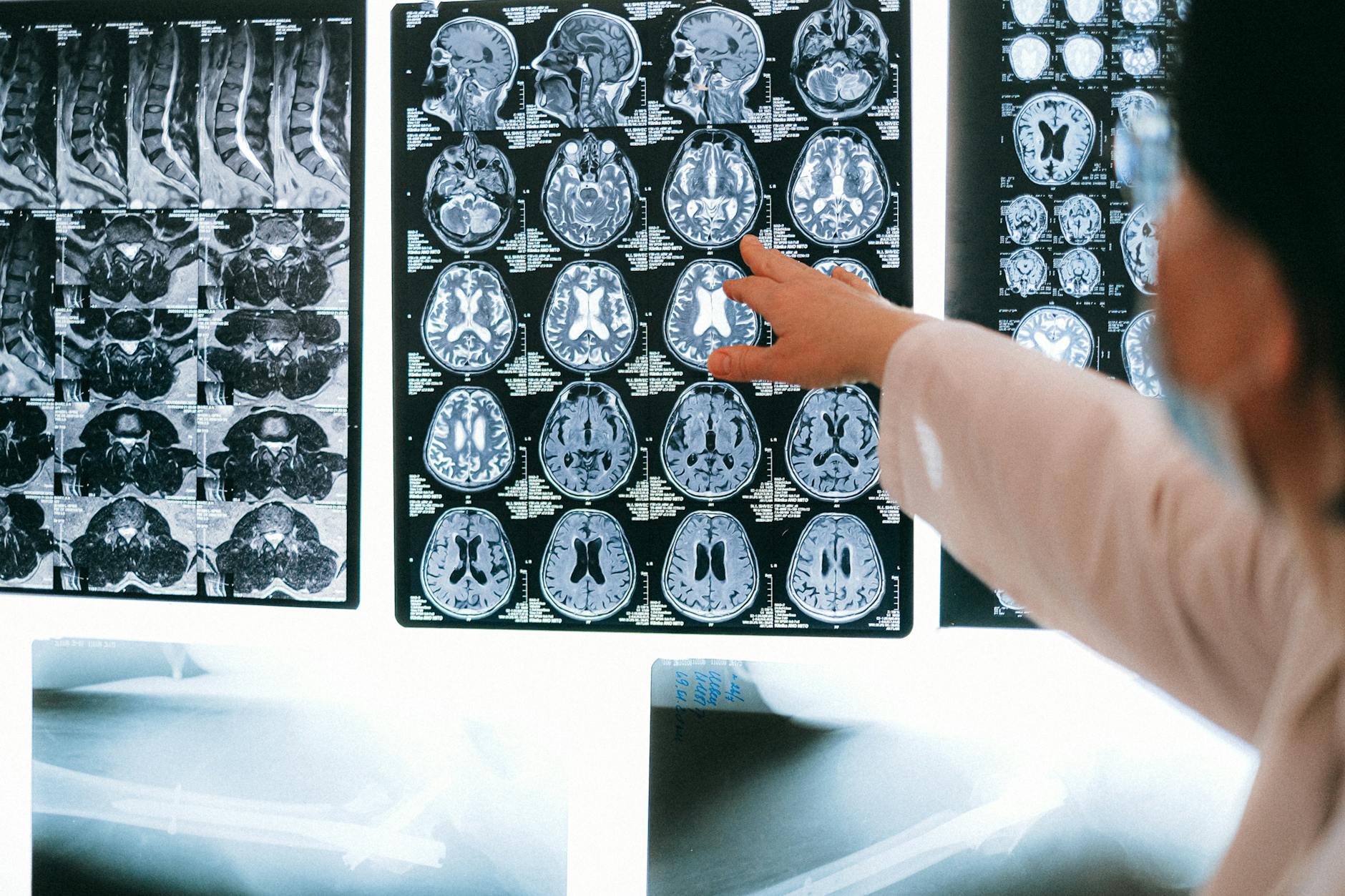
The occipital lobe processes the visual world. OCTON's vision layer reads mammography, MRI, CT, ultrasound, multi-frame DICOM and lab/path PDFs — surfaced through reporting systems clinicians already trust (BI-RADS, LI-RADS, Lung-RADS, Fukuoka, TIRADS, Bethesda).

MMGMammography
BI-RADS
Demo: DCIS at 4B
MRIMagnetic resonance
T1/T2/FLAIR/DWI
Demo: IPMN worrisome
CTComputed tomography
Lung-RADS · Fleischner
Demo: Part-solid nodule
USUltrasound
TIRADS
Demo: Sub-cm thyroid
DICOMMulti-frame DICOM
HU-space WL/WW
Demo: 16-bit clinical-grade
PDFLab + path PDFs
Bethesda · Bosniak
Demo: Cytology cross-link
Platform

A three-tier brain,
built for whole-body health.

Modelled on the cortical pathway that makes a human clinician good — parallel sensing across 10 modalities, durable memory across years, adaptive reasoning across 13 specialties. One AI, not thirteen apps.

Built with clinicians · validated against peer-reviewed guidance
Sensory
Multimodal ingestion

Mammography, MRI / DICOM, CT, ultrasound, doppler, ECG, EEG, retinal fundus, dermoscopy, pathology slides, lab PDFs, validated mental-health questionnaires (PHQ-9 / GAD-7) — normalized into a single clinical signal.

Memory
Longitudinal memory

Every prior scan, lab, vital sign and mood screen is retained so subtle evolution — radiological, metabolic, cognitive, psychological — is flagged 6–18 months earlier than single-read baselines.

Reasoning
Differential reasoning

OCTON's clinical AI produces BI-RADS / LI-RADS / Lung-RADS / ACC-AHA / ADA / DSM-5 aligned reads, ranked differentials and next-step actions across all 13 specialties.

Coverage · every system

Time decides outcome — every system, every condition.

Fifteen flagship modules across all 13 specialties — each anchored to a specific, named, peer-reviewed guideline. Not a marketing claim, an evidence statement. Hover any card to read the citation.

USPSTFNCCN v1.2025ACC/AHA 2024ADA 2025AASLD 2023KDIGO 2024GOLD 2024IDSAMcDonald 2024DSM-5-TRAPA 2024GINA 2024KDIGONOF 2022ESC 2024ATS/ERS
01
Oncology
Breast cancer

BI-RADS-aligned mammography, ultrasound + breast MRI second-read.

USPSTF 2024 (Grade B · 40–74 yr) · NCCN v1.2025 · ACR BI-RADS 5e

Evidence-gradeOpen
02
Oncology
Lung cancer · LDCT screening

Low-dose CT nodule characterization with Lung-RADS reporting.

USPSTF 2021 (Grade B · 50–80 yr / 20-pack-yr) · NCCN v1.2025 · NLST 2011

Evidence-gradeOpen
03
Oncology
Colorectal cancer

Polyp + mass detection on colonoscopy, CT colonography, pathology.

USPSTF 2021 (Grade A · 45–75 yr) · NCCN v1.2025 · ACS 2018

Evidence-gradeOpen
04
Cardiology
Coronary artery disease

CCTA + functional stress + CACS-driven primary prevention.

ACC/AHA 2024 Chest-Pain · MESA Calcium Score · ESC 2024 SCAD

Evidence-gradeOpen
05
Cardiology
Hypertension

Office + 24-hr ambulatory BP, target-organ protection.

ACC/AHA 2017 + Whelton 2023 update · SPRINT NEJM 2015

Evidence-gradeOpen
06
Cardiology
Stroke · AFib primary prevention

CHA₂DS₂-VASc + HAS-BLED stratification, opportunistic AFib detection.

AHA/ASA 2024 · ESC 2024 AFib · CHA₂DS₂-VASc validated cohort

Evidence-gradeOpen
07
Metabolic
Type-2 diabetes

Glycemic targets + cardiorenal protection (SGLT2 / GLP-1).

ADA Standards of Care 2025 · UKPDS · EMPA-REG OUTCOME 2015

Evidence-gradeOpen
08
Hepatology
MASLD / NAFLD

FIB-4 + FibroScan-driven fibrosis stratification; HCC surveillance gateway.

AASLD 2023 (Rinella et al.) · EASL 2024 · resmetirom NEJM 2024

Evidence-gradeOpen
09
Neurology
Cognitive decline · dementia

Mini-Cog / MoCA + reversible-cause work-up; family-history risk.

AAN 2020 · USPSTF 2020 (Insufficient evidence — case-finding)

Evidence-gradeOpen
10
Neurology
Multiple sclerosis

Dissemination-in-space-and-time MRI criteria + CSF oligoclonal bands.

McDonald 2024 criteria · MAGNIMS 2021 · ECTRIMS

Evidence-gradeOpen
11
Mental health
Depression · PHQ-9

Universal PHQ-9 screening + stepped-care; suicide-risk escalation.

USPSTF 2023 (Grade B · all adults) · DSM-5-TR · APA 2024

Evidence-gradeOpen
12
Infectious
Viral hepatitis · HBV / HCV

One-time HCV + HBV screening · drives HCC + lymphoma silent decades.

USPSTF 2020 (Grade B · all adults) · CDC 2020 · AASLD 2023

Evidence-gradeOpen
13
Pulmonology
COPD · spirometry

FEV₁/FVC < 0.7 confirmation; smoking-driven irreversible obstruction.

GOLD 2024 Report · ATS/ERS · USPSTF 2022 (Grade D screening · symptomatic Dx)

Evidence-gradeOpen
14
Nephrology
Chronic kidney disease

eGFR + ACR-staged silent kidney loss; cardiorenal-protective dosing.

KDIGO 2024 CKD Guideline · CARES NEJM 2023 · finerenone FIDELIO 2020

Evidence-gradeOpen
15
Musculoskeletal
Osteoporosis · DEXA + FRAX

Fragility-fracture prevention; T-score + 10-yr hip-fracture risk.

USPSTF 2025 (Grade B · ≥65 yr women) · NOF 2022 · FRAX validated

Evidence-gradeOpen

OCTON HEALTH 360 is clinical-decision support — every recommendation cites its primary source. Outcome data: Cox 2022 (Lancet Oncology · stage-shift), Sjöberg 2023 (Lancet Public Health · 30–60% mortality reduction in screened cohorts).

USPSTF A + B catalog
Radiologist reviewing imaging
For Clinicians

A PACS-adjacent second read, not a replacement.

Triaged case queue
Cross-specialty: oncology · cardiology · metabolic · neurology · mental-health screens. Pending · flagged · reviewed.
Side-by-side compare
Prior-vs-current imaging, longitudinal labs, mood + cognition trends.
Real-time alerts
On every flagged finding — radiology, labs, vitals, PHQ-9 / GAD-7 escalations.
DICOM + lab-native
.dcm, lab PDFs, ECG strips, retinal, dermoscopy — rendered and analyzed automatically.
Open clinician console
Stethoscope
For Patients

Know your risk. Keep your screenings current.

Personal risk score
0–100 per condition (cancer + cardiometabolic + neurology + mental health), evidence-based, modifiable-factor aware.
Preventative calendar
Mammogram, FIT, LDCT, HCC surveillance, BP recheck, HbA1c, dexa, depression screen — on schedule.
Lifestyle levers
The few things that actually move your number — heart, brain, blood, mood.
Second-read upload
Upload your scans and lab reports for an AI second-opinion across 13 specialties.
Start my risk check
Grounded in open science

Every recommendation is traceable to a public source.

OCTON's risk engine, screening cadences, scan-AI categories, and cross-cancer correlations are calibrated against 15 free, peer-reviewed datasets, registries, and clinical-society guidelines. No proprietary black box — every line of reasoning has a citation a regulator or peer-reviewer can verify.

4
Imaging archives
1
Clinical trials
2
Genomic atlases
5
Society guidelines
3
Neuroscience

Open science underwrites every OCTON recommendation.

  • The Cancer Imaging Archive (TCIA)
    Imaging archives · ~250k imaging studies

    Largest public oncology imaging repository. Curated by NCI; underpins LIDC-IDRI, CBIS-DDSM, ProstateX, BraTS, and others.

    OCTON use · Reference distributions for BI-RADS / LI-RADS / Lung-RADS category priors and modality coverage validation.

  • LIDC-IDRI · Lung Image Database Consortium
    Imaging archives · 1,018 thoracic CT scans · 4 expert radiologists / nodule

    Gold-standard public LDCT corpus for lung-nodule detection benchmarks. Each nodule ≥3 mm has 4 independent expert annotations.

    OCTON use · Lung-RADS calibration · nodule-attention region priors.

  • CBIS-DDSM · Curated Breast Imaging Subset
    Imaging archives · 10,239 mammograms · 6,775 cases

    Curated, BI-RADS-labeled subset of the Digital Database for Screening Mammography. Re-processed for ML.

    OCTON use · Mammography view priors and BI-RADS distribution validation.

  • BraTS · Brain Tumor Segmentation Challenge
    Imaging archives · ~2,000 multi-sequence MRI

    MICCAI annual challenge providing the largest public multi-sequence MRI corpus with expert tumor segmentations.

    OCTON use · Multi-sequence fusion methodology reference.

  • National Lung Screening Trial (NLST)
    Clinical trials · 53,454 high-risk subjects · NEJM 2011

    Landmark RCT proving 20% reduction in lung-cancer mortality from LDCT screening. Foundation of USPSTF Grade B recommendation.

    OCTON use · Lung-screening eligibility priors and outcome calibration.

  • TCGA · The Cancer Genome Atlas
    Genomic atlases · 11,000+ cases · 33 cancer types

    Joint NCI/NHGRI molecular characterization of 33 cancer types. Defines the modern molecular taxonomy of cancer.

    OCTON use · Cross-cancer correlation grounding — hereditary syndrome → tumor-type mapping (BRCA, Lynch, HRD, MSI-H, TMB, BRAF, KRAS).

  • COSMIC · Catalogue Of Somatic Mutations In Cancer
    Genomic atlases · 1.5M+ samples · curated literature

    Sanger Institute's expert-curated somatic mutation catalogue. Driver-gene reference.

    OCTON use · Biomarker validation for the genomic-correlation rows in the cross-cancer engine.

  • USPSTF · US Preventive Services Task Force
    Society guidelines · Evidence-graded A·B·C·D·I

    Independent volunteer panel issuing evidence-graded screening recommendations for the US.

    OCTON use · Default preventative-plan engine — breast, colorectal, lung, cervical, prostate intervals.

  • NCCN · National Comprehensive Cancer Network
    Society guidelines · 60+ cancer-type guideline panels

    Premier multi-society oncology guidelines — updated continuously and cited in every OCTON narrative.

    OCTON use · Hereditary-syndrome management (BRCA1/2, Lynch, Li-Fraumeni) and anomaly-tier action thresholds.

  • ACR · BI-RADS · LI-RADS · Lung-RADS · TI-RADS
    Society guidelines · Standardized 0–6 / 1–5 categories

    American College of Radiology standardized reporting and data systems — every OCTON scan report emits in these systems.

    OCTON use · Direct mapping into FHIR DiagnosticReport conclusionCode + scan-AI category emission.

  • AASLD · LI-RADS HCC Surveillance
    Society guidelines · Practice-guidance updates 2018·2023

    American Association for the Study of Liver Diseases — guidance on HCC surveillance in cirrhotic patients.

    OCTON use · LI-RADS rule emission and post-DAA HCC surveillance cadence.

  • ESMO · Clinical Practice Guidelines
    Society guidelines · All major tumor types

    European Society for Medical Oncology — international consensus guidelines used alongside NCCN.

    OCTON use · Cross-region preventative-plan validation (NCCN-ESMO concordance).

  • Allen Brain Atlas
    Neuroscience · Whole-brain mouse + human atlases

    Allen Institute's open atlas of mammalian brain gene expression and connectivity. Reference for the cortex-laminae-to-deep-net mapping.

    OCTON use · Inspires the cortex⇄deep-net analogy used in the hero visualization.

  • Human Connectome Project
    Neuroscience · 1,200+ subjects · multi-modal

    NIH-funded open dataset of high-resolution functional and diffusion MRI across 1,200 healthy adults — basis for modern in-vivo connectomics.

    OCTON use · Reference for the DTI tractography and fMRI activation overlays in the platform's visual identity.

  • Brodmann Cytoarchitectonic Atlas (1909)
    Neuroscience · 52 numbered cortical areas

    Korbinian Brodmann's century-old cytoarchitectonic parcellation — still the lingua franca of cortex localization.

    OCTON use · BA-area markers used throughout the visual cortex map (BA4, BA17, BA22, BA44/45).

EVIDENCE BASE

Built on peer-reviewed guidance.

Every risk calculator, screening schedule and reporting framework is traceable to a specific, citable source. Refreshed annually with USPSTF, NCCN, BMJ, EASL and ACS.

  • USPSTF 2024 — biennial mammography 40–74
  • NCCN Breast Screening v1.2025 — BI-RADS reporting
  • International CAPS 2022 — high-risk pancreas surveillance
  • AASLD 2023 & EASL 2023 — LI-RADS HCC surveillance
  • USPSTF 2021 — colorectal screening begins at 45
  • ACS 2024 — CRC multimodal screening cadence
  • BMJ 2024;384:e076765 — new-onset diabetes & pancreas
  • BMJ 2022;376:e068714 — early-onset colorectal cancer